


Blog

Why Are Plastic Factories Essential for Modern Industry?

In today's fast-paced industrial landscape, plastic factories play a pivotal role. According to Dr. Emily Carter, a renowned expert in polymer science, "Plastic factories are the backbone of modern manufacturing." This statement emphasizes the undeniable significance of these facilities. They produce materials that are integral to countless products we use daily.

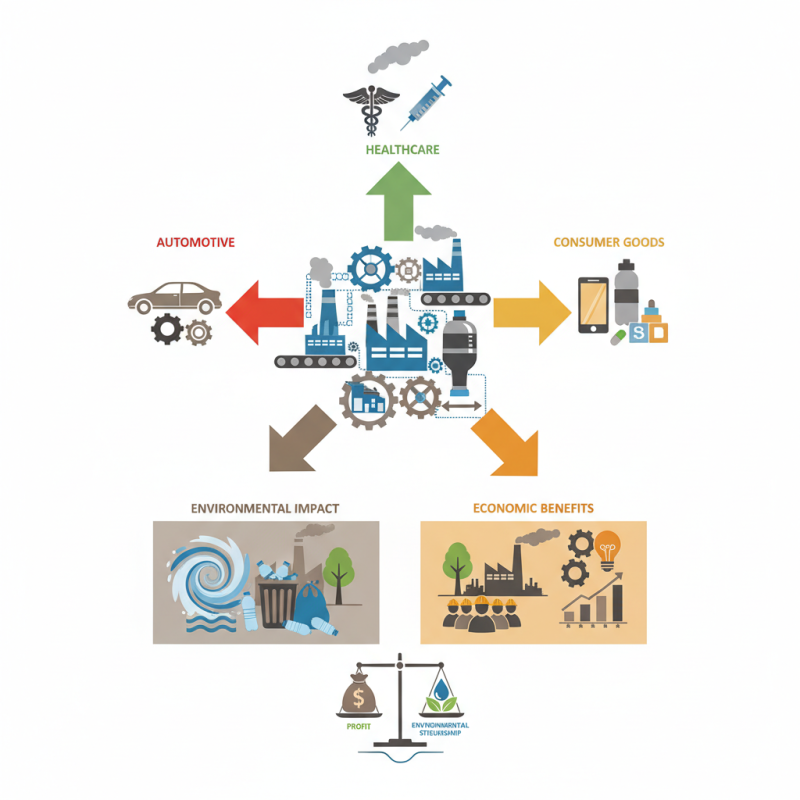
Plastic factories are essential for producing components across various sectors. They enable the creation of lightweight, durable, and cost-effective materials. Industries such as automotive, healthcare, and consumer goods rely heavily on plastic. However, the environmental impact raises concerns. Many factories struggle with waste management and sustainability. This contradiction prompts a critical reflection on the industry's future.

Local economies also benefit from plastic factories. They create jobs and drive innovation. Yet, there is a need for better regulations and practices. Balancing profit with environmental stewardship remains a challenge. As our reliance on plastic increases, so does the urgency for responsible production methods.
Why Are Plastic Factories Essential for Modern Industry?

The Role of Plastic Factories in Manufacturing Supply Chains

Plastic factories play a crucial role in today's manufacturing supply chains. They create a variety of plastic products essential for numerous industries. From automotive components to packaging materials, plastics are everywhere. Their versatility allows manufacturers to meet diverse needs and specifications. However, this reliance on plastic also raises environmental concerns.

Despite the benefits, challenges exist in the production process. The energy consumption in plastic factories is significant. Many factories struggle with waste management and recycling issues. As the demand for sustainable solutions grows, the industry faces pressure. Innovations are needed to make plastic production more eco-friendly.

Moreover, the role of logistics in supply chains cannot be overlooked. Plastic parts must be delivered quickly to keep the production lines running. Delays can disrupt entire operational schedules. Companies must constantly evaluate their sourcing and transportation strategies. Balancing efficiency with sustainability remains a complex task.
Importance of Plastic Factories in Modern Industry

This bar chart illustrates the percentage of plastic use across various industries, highlighting the essential role of plastic factories in modern manufacturing supply chains.

Innovations in Plastic Production and Their Industrial Applications

Plastic production has revolutionized modern industry. Innovations in plastic materials have led to improved durability and functionality. Lightweight yet strong, plastics are widely used in various sectors. For instance, the automotive industry benefits from plastic components that reduce weight, enhancing fuel efficiency.

Tips: Consider the end-use of plastic in your projects. Not all plastics are the same. Some are better for specific applications. Choosing the right type can improve performance.

In healthcare, plastics play a crucial role. They are used in medical devices, packaging, and even prosthetics. Innovations such as biodegradable plastics are evolving, addressing environmental concerns. However, the reliance on plastics raises questions about sustainability. Many are not easily recyclable and contribute to pollution.

Tips: Always think about recyclability. Are you prioritizing sustainable materials? Avoid single-use plastics where possible. Look for alternatives that are eco-friendly.

Why Are Plastic Factories Essential for Modern Industry? - Innovations in Plastic Production and Their Industrial Applications

Dimension Data
Global Plastic Production (Million Metric Tons) 368
Percentage of Plastics in Manufacturing 20%
Top Plastic-Using Industries Automotive, Packaging, Construction
Innovative Plastic Applications 3D Printing, Medical Devices, Lightweight Components
Recycling Rate of Plastics 9%
Projected Growth of Plastic Industry by 2030 (%) 4.5%
Major Innovations in Plastic Manufacturing Biodegradable Plastics, Advanced Polymers, Smart Plastics

Environmental Considerations in Plastic Manufacturing Processes

Plastic manufacturing processes play a crucial role in modern industry. However, environmental considerations are increasingly important. According to the World Economic Forum, plastic waste could reach 1.3 billion tons annually by 2040 if current trends continue. This statistic raises alarming questions about sustainability.

The production of plastic is resource-intensive. The industry significantly contributes to greenhouse gas emissions. Reports indicate that it accounts for nearly 3.8% of global emissions. These figures highlight a critical area for improvement. While plastic is a versatile material, its lifecycle poses environmental challenges. Recycling rates are low, with only 9% of plastics ever being recycled.

Moreover, the water consumption in plastic manufacturing is substantial. On average, producing 1 kg of plastic requires about 4 kg of fresh water. This means that while plastic factories are essential for various sectors, they also demand a serious examination of their environmental footprint. Innovation in eco-friendly practices is necessary to mitigate these issues. Balancing industrial needs with sustainability is an ongoing challenge.

Economic Impact of Plastic Factories on Local and Global Markets

Why Are Plastic Factories Essential for Modern Industry?

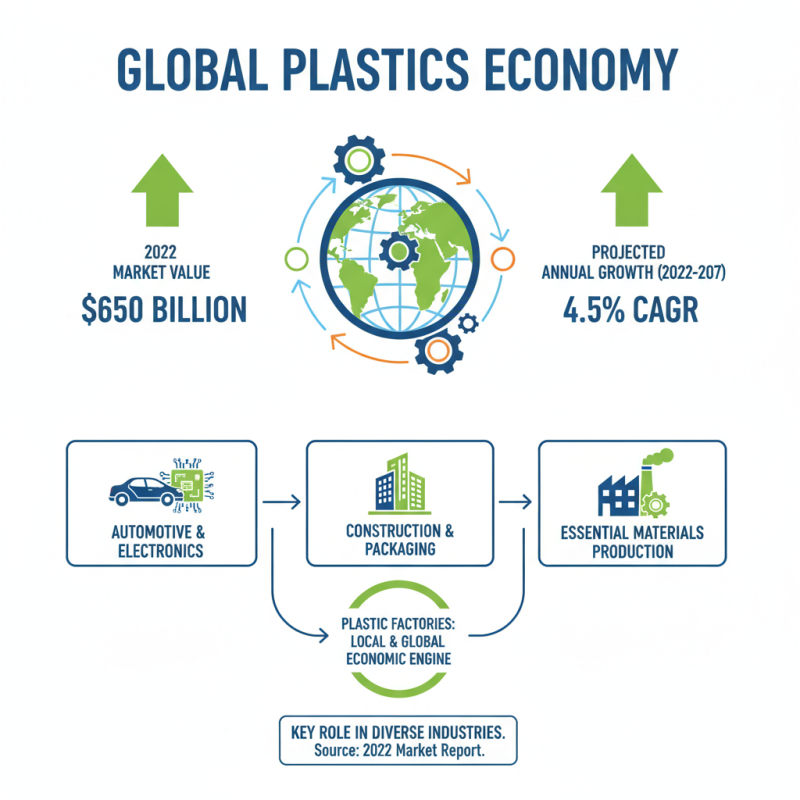
Plastic factories play a crucial role in both local and global economies. These facilities produce a wide variety of materials that are essential for industries like automotive, electronics, and construction. According to a 2022 market report, the global plastic market reached a staggering $650 billion, with an expected growth rate of 4.5% annually. This growth reflects the increasing demand for plastic products across various sectors.

In many regions, plastic factories provide significant employment opportunities. For instance, in the United States, the plastics industry accounts for over 1 million jobs. Local economies thrive as these factories often support smaller suppliers and related businesses. However, there is a catch. The environmental impact of plastic production raises serious concerns. Many factories struggle to manage waste effectively, leading to pollution issues. This dilemma poses challenges for sustainable growth.

Furthermore, while plastics have revolutionized industries, there is a pressing need for innovation in recycling practices. Currently, only 9% of plastics are recycled worldwide. This low rate is alarming and demands reflection from both manufacturers and consumers. As we march towards a more sustainable future, the balance between economic benefits and environmental responsibilities must be critically examined.

Future Trends in Plastic Factory Technology and Sustainability Practices

The future of plastic factory technology is evolving rapidly. Innovations focus on creating sustainable practices. Advancements in recycling methods are crucial. New technologies allow for better separation of plastics. This means higher quality recyclables. Factories are now exploring alternative materials. Bioplastics, derived from renewable sources, show promise. They could replace traditional plastics in various industries.

Sustainability practices are being integrated into production lines. Energy-efficient machinery reduces carbon footprints. Waste reduction strategies minimize excess output. Some factories are adopting a circular economy model. This model encourages reuse and recycling. However, challenges remain. Not all plastics are recyclable. Not all factories can invest in new technologies. This raises questions about accountability and progress.

Consumer demand is also shifting. People seek products made sustainably. This pressure encourages factories to adapt. Education about plastic waste is vital. It is an ongoing challenge. Each step toward improvement is significant, yet imperfect. The pathway to sustainability in plastic manufacturing is evolving, but progress can be slow.

Register now