


Blog
How to Choose the Best PP Masterbatch for Your Needs?
Choosing the right PP masterbatch can significantly influence the quality of your final product. Many manufacturers overlook this critical choice. Selecting a suitable PP masterbatch involves understanding its composition, application, and performance in various conditions.
The first step is to evaluate your specific requirements. Different applications demand different types of masterbatches. For instance, the required color, opacity, and processing temperature can vary drastically. It’s important to identify these needs early in the decision-making process. Additionally, understanding the characteristics of the PP masterbatch, such as its compatibility with your base polymer, is essential.
Another vital aspect is the supplier's credibility. Not all suppliers provide the same quality of PP masterbatch. Researching their experience and past performance can save you from future issues. Reliable suppliers will provide detailed technical data sheets and can offer tailored solutions. Make sure to ask for samples to test before committing to a large order. Remember, the right PP masterbatch makes a difference, but choosing poorly can lead to material failures and wastage.
Understanding PP Masterbatch and Its Importance in Plastics
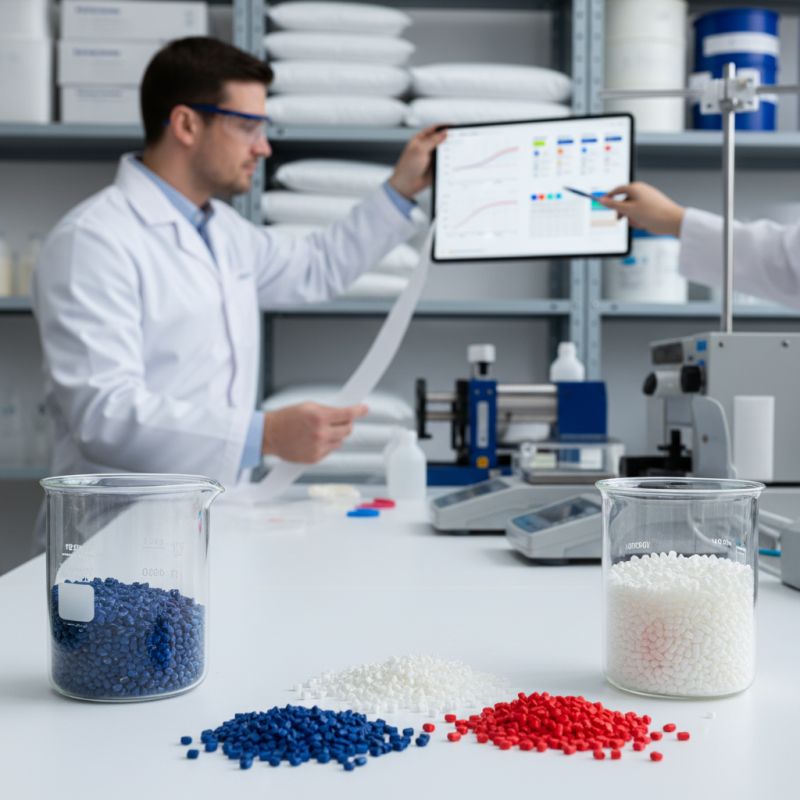
Polypropylene (PP) masterbatch plays a crucial role in the plastics industry. This concentrated mixture enhances the overall quality of plastic products. Masterbatches are essential for improving color, UV protection, and other material properties. They are typically comprised of pigments or additives and are incorporated into the polymer matrix. Understanding their significance can help manufacturers make informed decisions in production.
Choosing the right PP masterbatch involves a close examination of specific needs. Factors include the type of product, desired appearance, and environmental conditions. Not all masterbatches are created equal. Some may offer better dispersibility or stability than others. This variation means manufacturers should conduct thorough testing to ensure compatibility.
Likewise, reflecting on past experiences can lead to better choices. Manufacturers often learn from trial and error when selecting the right materials. Sometimes, unexpected results arise, highlighting the need for careful evaluation of options. The learning process is integral to refining production methods and achieving better outcomes in the long run.
PP Masterbatch Types and Their Applications
Key Factors to Consider When Selecting PP Masterbatch
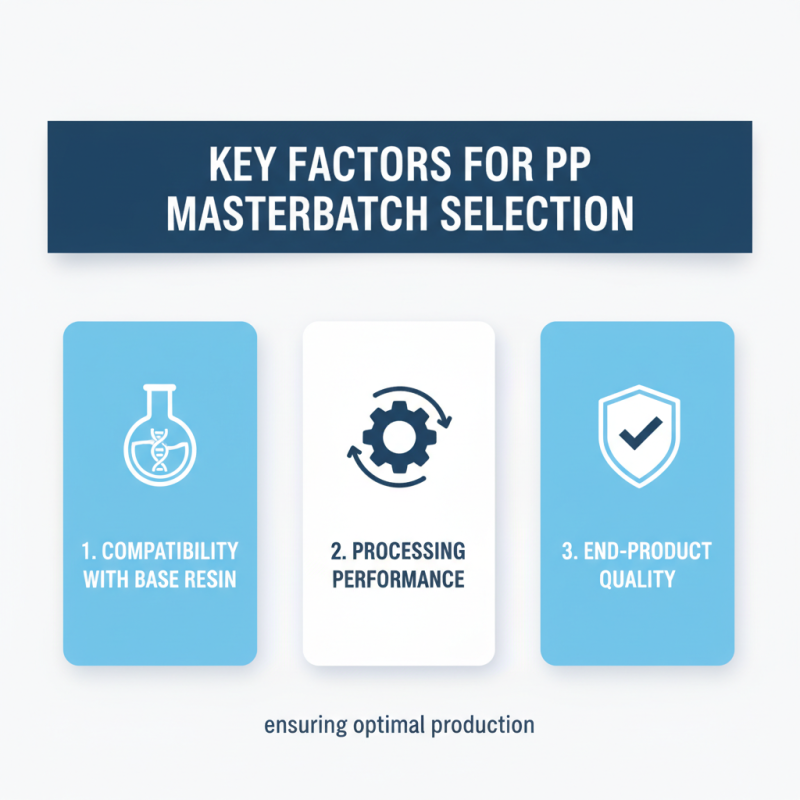
Choosing the right PP masterbatch is essential for ensuring your production meets quality standards. There are key factors to consider when selecting the best option for your needs. One important aspect is compatibility with your base resin. This ensures smooth processing and optimal end-product performance.
Additionally, consider the type of additives in the masterbatch. Different applications may require specific properties, such as UV stability or color concentration. Evaluating the concentration of the masterbatch is also crucial. A high concentration might be necessary for vivid colors, while a lower concentration may be sufficient for subtle hues.
Tips: Always request samples to test before making a final decision. This practical step helps verify that the masterbatch meets your performance expectations. Consult with suppliers or industry experts to get insights about the latest trends and technologies in masterbatch production. Ensuring sustainability is also a growing concern. Investigating eco-friendly options is worthwhile and reflects industry responsibility.
Types of PP Masterbatch and Their Applications
When selecting a PP masterbatch, understanding the various types is crucial. There are mainly color masterbatches, black masterbatches, and additive masterbatches. Color masterbatches provide vibrant hues to polypropylene products. These concentrates blend pigments into resin, ensuring durability. The choice of color depends on the final application, such as packaging or automotive parts.
Black masterbatches, on the other hand, serve a dual purpose. They enhance the color and provide UV protection. This is vital for outdoor applications. In contrast, additive masterbatches enhance the functional properties of PP. They can improve flame retardancy, UV stability, or other characteristics. The selection process can be tricky as not all additives work well together.
Consider your specific needs before making a decision. Each type has strengths and potential drawbacks. Engage with suppliers for insights on compatibility. Experimenting with samples can reveal unexpected results. Knowledge of your final product’s requirements will guide you in choosing effectively.
How to Choose the Best PP Masterbatch for Your Needs? - Types of PP Masterbatch and Their Applications
| Type of PP Masterbatch | Composition | Applications | Key Features |
|---|---|---|---|
| Color Masterbatch | Polypropylene + Pigments | Textiles, Packaging, Automotive | High color consistency, UV resistance |
| Additive Masterbatch | Polypropylene + Additives | Film production, Injection molding | Enhanced durability, Improved thermal stability |
| Filler Masterbatch | Polypropylene + Fillers | Non-woven fabrics, Packaging films | Cost efficiency, Lightweight |
| Flame Retardant Masterbatch | Polypropylene + Flame retardants | Electronics, Building materials | Safety compliance, High-performance |
| Anti-static Masterbatch | Polypropylene + Anti-static agents | Packaging, Electronic components | Prevention of dust accumulation, Improved handling safety |
How to Evaluate the Quality of PP Masterbatch
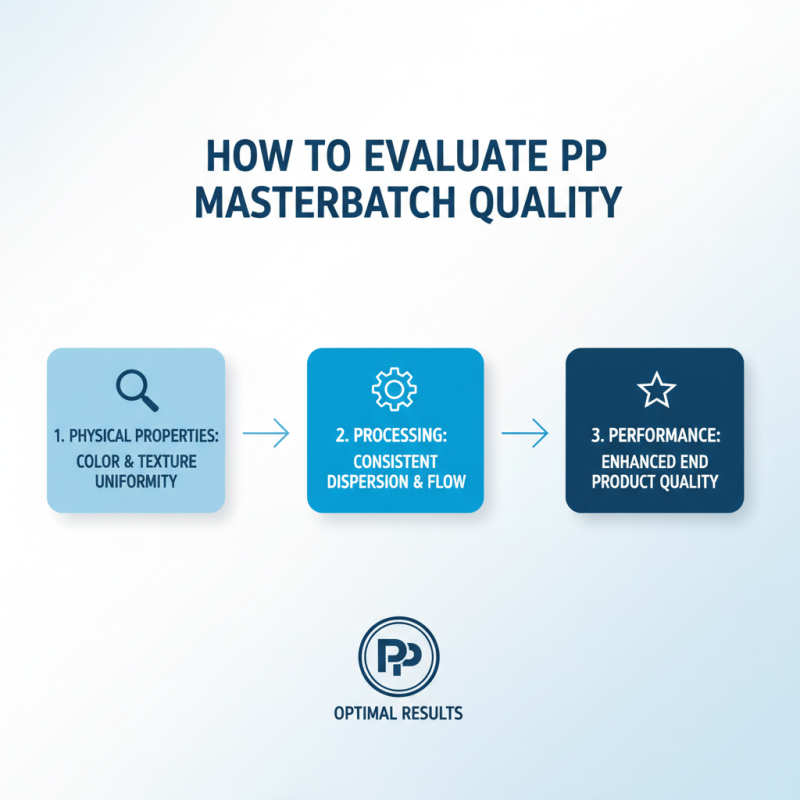
Evaluating the quality of PP masterbatch is crucial for achieving optimal results in your applications. Begin by examining the physical properties of the masterbatch. Look for consistency in color and texture. This ensures uniformity in your final product. A uniform masterbatch contributes to better processing and enhanced performance.
Consider light and heat stability. Quality PP masterbatches should resist degradation when exposed to high temperatures or UV light. Testing the masterbatch under these conditions can reveal its durability. Ensure that it aligns with the specific requirements of your manufacturing process.
**Tips**: Always request sample batches before making large orders. This allows you to conduct tests and assess properties firsthand. Review product certifications and lab reports for assurance. Trustworthy suppliers provide transparency in their quality assurance processes. It's important to reflect on your needs and communicate them clearly to your supplier.
Cost Considerations and Budgeting for PP Masterbatch选
When considering the costs of PP masterbatch, it's essential to weigh several factors. The formulation of the masterbatch significantly affects its price. Usually, high-quality masterbatches are more expensive but offer better performance. Cheaper options might seem appealing, but they could lead to higher costs in production losses or product failures. Evaluate the functionalities required, such as color strength or UV stability, which could save money in the long run.
Budgeting for PP masterbatch also requires understanding the volume needed for your production. Buying in bulk often results in discounts. However, excess inventory can lead to waste if your needs change. It's a balancing act. Don't overlook the cost of implementation. Choosing a product that aligns with existing processes can save both time and money.
Sometimes, you may find that a more suitable option is outside your initial budget. This might require rethinking priorities. Consider consulting with experts. Their insights can provide clarity on what you truly need, helping avoid potential overspending. Reflect regularly on whether you're getting the desired performance to ensure your budget aligns with your goals.
Related Posts
-
Ultimate Tips for Choosing the Right PP Masterbatch for Your Projects
-
How to Use Plastic Filler Compound for Perfect Repairs?
-
Exploring the Future of Sustainability with Bio Plastics and Their Impact on Our Environment
-
Top 10 Best Plastic Fillers for Your Home Projects?
-

Why Plastic Additives Are Essential for Enhancing Material Performance
-
What Are the Benefits of Using PP Plastic in Everyday Products?