China Top 10 Handheld Infrared Sensor Manufacturers?
Handheld Infrared Sensor technology is moving from specialist laboratories into factories, buildings, power networks, and field maintenance. Its value is practical: a technician can scan a motor bearing, switch cabinet, or rooftop panel without physical contact. The screen may show a small hot spot before failure becomes visible. Sometimes, however, the image looks convincing and still misleads.
MarketsandMarkets’ Thermal Imaging Market report identifies industrial inspection, predictive maintenance, and security as major growth applications. Its research projects continued expansion through 2028, supported by smaller sensors, improved detector sensitivity, and wider wireless connectivity. Grand View Research also reports rising demand for compact thermal imaging equipment across industrial and commercial environments. These reports support the market’s direction, but they do not prove every manufacturer offers equal quality.
Dr. Michael Vollmer, a recognized thermal-imaging researcher and co-author of Infrared Thermal Imaging, emphasizes a vital principle: “A thermal image is a measurement, not just a picture.” That distinction shapes this China Top 10 Handheld Infrared Sensor manufacturers overview. The evaluation considers detector type, spectral range, temperature accuracy, calibration support, software capability, durability, and after-sales service. Product datasheets matter. So do field results.
China’s supply chain is broad, yet comparison remains difficult. Some specifications use different testing conditions. Some claims need independent verification. That is the uncomfortable part. A lower price may hide limited calibration records, weak ergonomics, or inconsistent software. This guide therefore focuses on evidence, application fit, and manufacturer credibility rather than ranking alone.
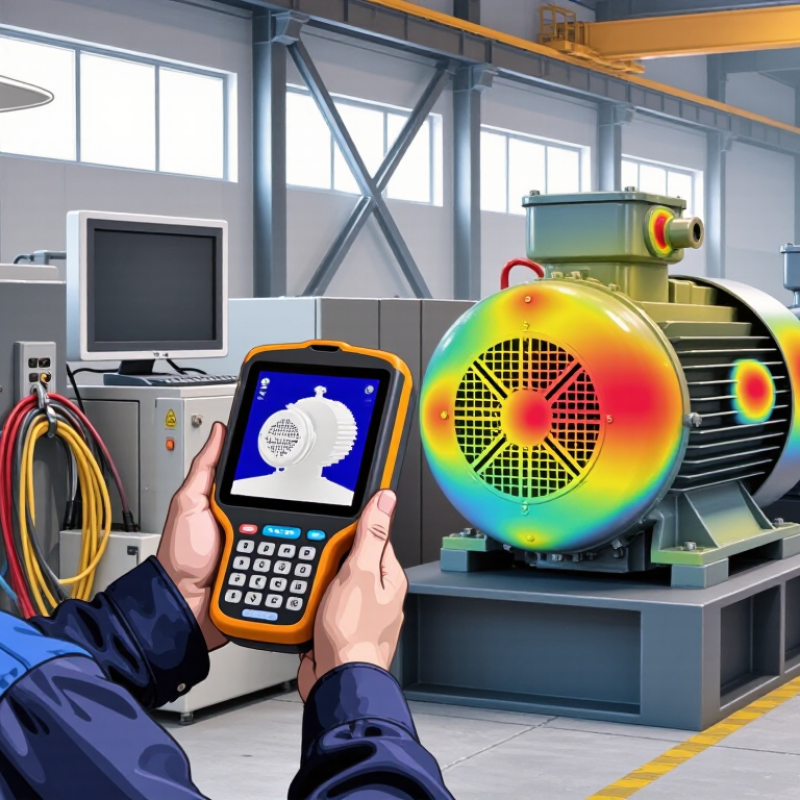
What Are Handheld Infrared Sensors and How Do They Work?
Handheld infrared sensors measure invisible infrared radiation released by objects. Unlike contact probes, they can check a hot pipe, motor housing, or human skin without touching the surface. A detector receives this radiation and converts it into an electrical signal. Internal software then estimates temperature or displays a thermal image.
The result depends on more than detector quality. Surface emissivity matters. Matte black rubber usually gives a steadier reading than polished aluminum. Distance also changes accuracy because the sensor measures an area, not a single point. A narrow target can be missed easily. Ambient heat, dust, steam, and a dirty lens may distort the reading. Real field work is less perfect than a product sheet suggests.
When assessing Chinese handheld infrared sensor manufacturers, buyers should examine calibration records, detector specifications, response time, operating temperature, and test procedures. A dependable supplier should explain uncertainty instead of promising absolute accuracy. Ask for repeatability data from controlled tests. Then compare it with readings from a traceable reference instrument. Calibration must be checked regularly, especially after drops or major temperature changes. A practical operator should also let the sensor adjust to the work environment before measuring. Small habits matter. Test conditions should be recorded, including distance, emissivity settings, surface type, and ambient temperature. Without these details, two correct-looking readings may not be genuinely comparable.
How to Evaluate Handheld Infrared Sensor Manufacturers
China Top 10 Handheld Infrared Sensor Manufacturers?
Evaluating handheld infrared sensor manufacturers requires more than comparing prices. MarketsandMarkets’ 2024 Thermal Imaging Market report estimates growth from about USD 4.7 billion in 2023 to USD 6.2 billion by 2028. This expansion increases supplier choice, but also makes technical verification harder. Request sensor data sheets, calibration records, and production traceability. Check spectral range, temperature accuracy, response time, NETD, and measurement drift. A low price means little without stable readings.
Look for evidence, not polished brochures. Ask whether calibration follows ISO/IEC 17025 procedures and whether test conditions are clearly recorded. Inspect sample units in a controlled room. Compare readings against a traceable reference source at low, medium, and high temperatures. Test after repeated power cycles. Small errors can become costly in field inspections.
Really costly.
The sensor housing also matters. Verify ingress protection claims against IEC 60529 test documentation, rather than accepting an IP rating alone. Review battery endurance, display visibility, software export functions, repair timing, and spare-part availability. A manufacturer with transparent failure data may be more reliable than one showing only perfect results. I would also request three production samples, because one excellent sample proves very little. Grand View Research reports continued growth in infrared imaging demand, yet market reports cannot replace hands-on validation. Supplier audits should include operator training, final inspection records, and documented corrective actions.】【。
China’s Top 10 Handheld Infrared Sensor Manufacturers
China’s Top 10 Handheld Infrared Sensor Manufacturers are increasingly judged by measurable field performance, not factory scale alone. Industry reports from MarketsandMarkets estimate that the global infrared sensor market may grow at roughly 8% annually through 2029. Grand View Research also identifies thermal imaging as a steady-growth segment, supported by industrial inspection, building maintenance, and electrical safety work.
A practical review of China’s leading ten manufacturers should examine temperature accuracy, response time, calibration records, battery endurance, and performance in humid workshops. A reliable handheld unit should detect overheated terminals, uneven motor loads, and insulation failures without complicated setup. Many Chinese suppliers now provide compact sensors with digital displays, adjustable emissivity, data storage, and USB or wireless transfer. These features matter during inspections beside noisy production lines.
Yet ranking these manufacturers is not perfectly objective. Published specifications often use different testing distances and environmental conditions. That makes direct comparison difficult. In my experience, a sensor promising ±2% accuracy may perform differently on reflective metal surfaces. This detail is easy to overlook. Buyers should request sample reports, calibration certificates, and repeated tests at 0°C, 25°C, and higher industrial temperatures. After-sales response also deserves attention, because a technically strong sensor becomes less useful when replacement parts or recalibration take weeks.
China Top 10 Handheld Infrared Sensor Manufacturers
This chart compares representative spectral response ranges commonly used in handheld infrared sensing technologies. The ranges are technology-level reference values rather than manufacturer or brand performance data.
Wavelength ranges are shown in micrometers (µm); actual performance depends on detector structure, optics, filters, calibration, and operating conditions.
How to Choose the Right Chinese Manufacturer for Your Needs
Choosing among China’s top 10 handheld infrared sensor manufacturers requires more than comparing prices. The right supplier should match your measurement range, accuracy needs, operating environment, and expected order volume. Start with a clear specification sheet. Include target temperature range, response time, display requirements, battery life, and preferred communication interfaces.
Ask each manufacturer for recent calibration records, product samples, and testing procedures. A dependable factory should explain how sensors are calibrated and how readings remain stable after repeated use. Check production capacity, quality control checkpoints, engineer experience, and export documentation. Factory video calls can reveal useful details, such as clean assembly areas, labeled instruments, and controlled testing benches.
Do not trust polished brochures alone. Test samples under hot, cold, reflective, and uneven surfaces. I once focused too heavily on accuracy figures and overlooked poor button design. Field users struggled while wearing gloves. That mistake changed my evaluation process. Request repair policies, spare-part availability, firmware support, and realistic delivery times. Ask whether customization affects certification or testing schedules. A low quotation may hide expensive tooling, weak packaging, or slow technical responses.
Speak with the technical team, not only a sales representative. Their answers often show practical knowledge. Confirm measurement uncertainty in writing. Review independent inspection options before large orders. The best manufacturer may not offer the lowest price, but should provide consistent evidence, responsive communication, and products suited to your actual working conditions.